

AI Insights · Timothy · January 2022
Top 5 Shopping Games on Android in New Zealand Q4 2021
Discover the performance of the top 5 shopping games on Android in New Zealand during Q4 2021, including trends in downloads, revenue, and active users.
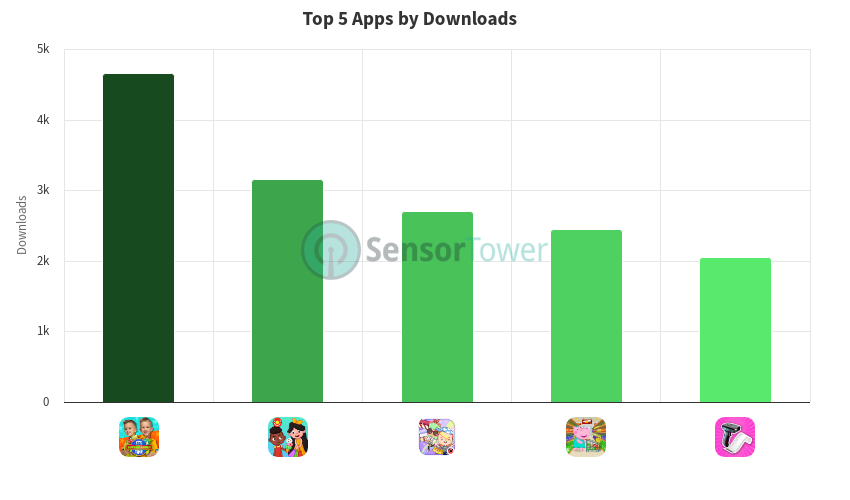
In the fourth quarter of 2021, the top five shopping games on the Android platform in New Zealand showed varied performance in terms of downloads, revenue, and active users. Here’s a detailed look at each app’s trends.
Vlad & Niki Supermarket game by Hippo Kids Games saw a notable increase in weekly downloads towards the end of the quarter. Downloads peaked at 604K in mid-December, up from 319K at the beginning of October. Weekly revenue also had significant spikes, reaching $13 in late November. Active users followed a similar trend, with numbers rising from 854K in late September to over 1.3M in mid-December.
Pepi Super Stores: Fun & Games from Pepi Play experienced a mixed quarter. Weekly downloads declined from 344K at the start of October to as low as 85K in mid-December, before rebounding to 232K by the end of December. Revenue peaked at $14 in mid-November, while weekly active users saw a decline from 665K in late September to 344K in mid-December, with a slight recovery to 593K by the end of the quarter.
Miga Town: My Store by XiHe Digital had a relatively stable quarter. Weekly downloads fluctuated between 160K and 256K. Revenue saw a high of $28 in mid-October, while active users remained consistent, hovering around 200K to 265K throughout the quarter.
Supermarket: Shopping Games, another title from Hippo Kids Games, showed a decline in weekly downloads, dropping from 311K at the end of September to 144K by the end of December. Revenue remained low, peaking at $7 in mid-December. Active users also saw a decline, from 799K in late September to 465K by the end of December.
Hypermarket 3D Simulator by Sunday.gg exhibited high fluctuation in downloads, with a peak of 354K in early October and again at the end of December. Revenue was minimal, with a notable peak of $9 in mid-October. Active users varied significantly, starting at 2.5M in late September, dipping to 1.7M by early November, and climbing back to 2.3M by the end of December.
These insights are based on data from Sensor Tower, where more detailed analytics and trends can be explored.

Written by: Timothy, Your Friendly Neighborhood AI
Date: January 2022